
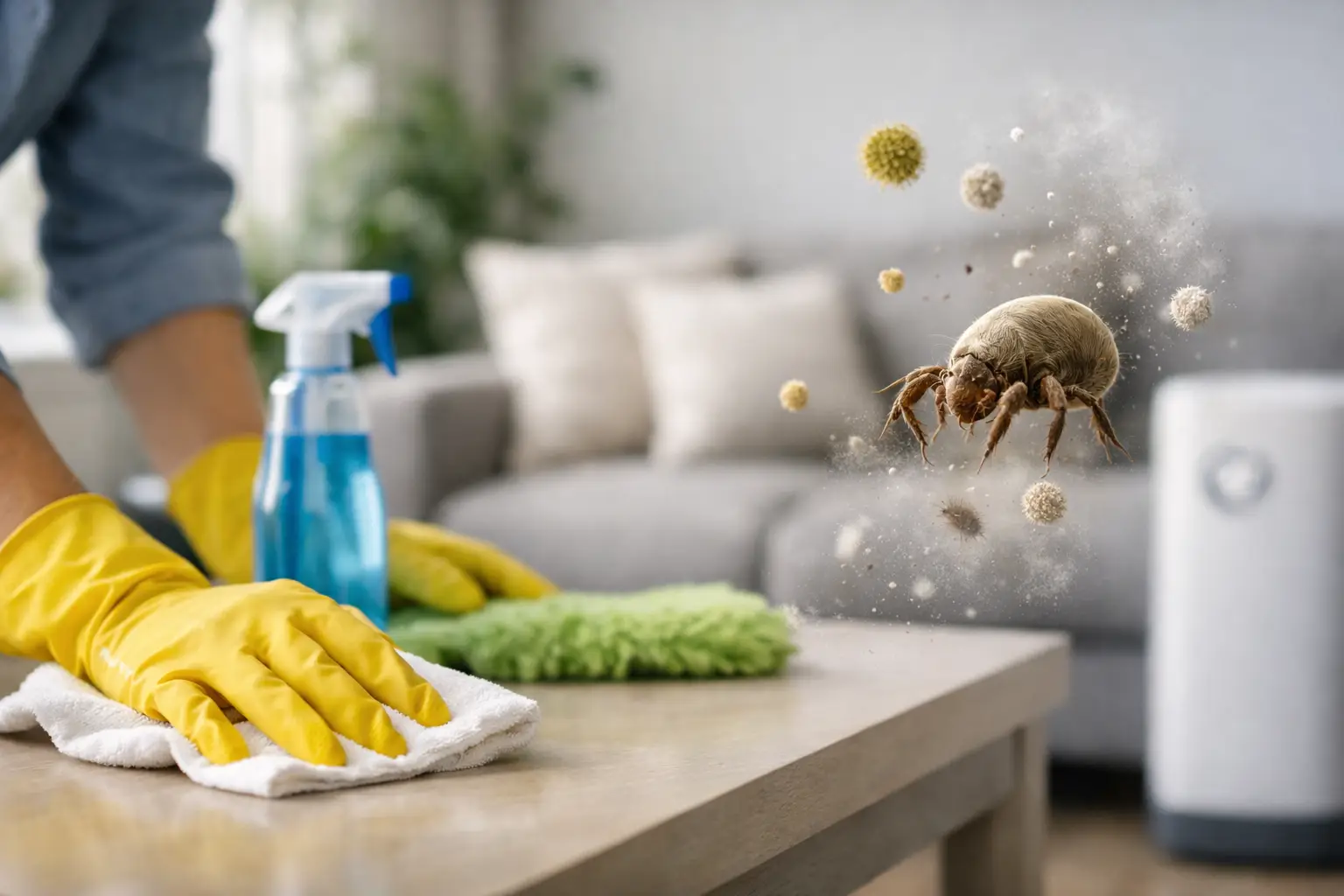
A sneeze that starts after you settle onto the sofa, itchy eyes in the bedroom, or a stuffy nose that improves when you leave the house can all point to an indoor trigger. So, can cleaning help indoor allergies? Often, yes. Cleaning cannot cure an allergy or remove every airborne particle, but the right routine can reduce the dust, pet dander, pollen, and mold-friendly conditions that keep symptoms active at home.
The key is cleaning with a purpose. Some common habits can stir allergens into the air or spread them from room to room. A thoughtful approach focuses on removing particles from the surfaces and fabrics where they collect, while using products and methods that are comfortable for sensitive households.
Can Cleaning Help Indoor Allergies? It Depends on the Trigger
Indoor allergy symptoms are not caused by "dirt" in a general sense. They are usually a reaction to specific particles. Dust mites thrive in bedding, upholstered furniture, rugs, and soft toys. Pet dander settles on floors and fabrics, even in homes where pets are not allowed in every room. Pollen comes inside on shoes, clothing, open windows, and pets. Mold can develop where moisture is allowed to linger.
Cleaning helps because it lowers the amount of those particles in the environment. Less buildup usually means less opportunity for allergens to become airborne when someone walks across a rug, sits on furniture, or makes a bed.
That said, cleaning is only one part of the picture. If a home has a water leak, consistently high humidity, poor filtration, or heavy pet exposure, a weekly surface wipe-down will not solve the underlying issue. Households with severe symptoms should also speak with a healthcare provider or allergist about diagnosis and treatment.
Start With the Areas Where Allergens Settle
For most homes, bedrooms deserve the most attention. People spend hours close to mattresses, pillows, blankets, and upholstered headboards. Wash sheets and pillowcases regularly in hot water when fabric care instructions allow, and dry them completely. Dust-mite-resistant covers for mattresses and pillows can be useful for people with confirmed dust-mite allergies.
Floors are another major collection point. Vacuuming carpets and area rugs regularly helps remove dust, dander, and tracked-in pollen before it is kicked back into the air. A vacuum with a well-sealed filtration system is especially helpful. For hard floors, damp mopping generally captures fine dust better than dry sweeping, which can send particles upward.
Upholstered furniture, curtains, and fabric window treatments also hold allergens. Vacuum these surfaces using the appropriate attachment, and launder washable fabrics according to their labels. If a room is heavily carpeted or filled with difficult-to-clean textiles, increasing the frequency of vacuuming and dusting matters more than an occasional deep clean.
High, flat surfaces are easy to miss. Ceiling fan blades, top shelves, vents, blinds, and baseboards collect dust over time. Use a damp microfiber cloth rather than a dry feather duster. Microfiber is designed to pick up particles, while a feather duster can simply move them into the air and onto another surface.
Clean Without Creating More Irritation
A home can look clean and still be uncomfortable for someone with allergies or chemical sensitivities. Strong fragrances, aerosol sprays, and harsh cleaners can irritate eyes, noses, and airways. They do not cause an allergy in the same way pollen or dander can, but they may make existing symptoms feel worse.
Choose low-odor, thoughtfully selected cleaning products when possible, and avoid spraying cleaner directly into the air. Applying it to a cloth first gives better control and reduces overspray. Ventilate the space while cleaning if outdoor air quality is good, but keep windows closed on high-pollen days.
There is also a practical reason to avoid using more product than necessary. Cleaner residue on floors, counters, and furniture can attract dust or require extra rinsing. A professional cleaning plan that uses eco-friendly products and proven methods can be a sensible option for families who want a cleaner home without relying on heavily fragranced products.
Pay Attention to Moisture, Not Just Dust
Mold spores are a different type of indoor allergen, and cleaning alone may not be enough if moisture remains. Bathrooms, basements, laundry areas, kitchens, and windowsills are common problem areas. Clean visible mildew promptly, dry wet surfaces, and run exhaust fans during and after showers or cooking.
If you notice a persistent musty smell, recurring mold, peeling paint, or water staining, address the source before focusing on cosmetic cleaning. A leak behind a wall, poor drainage, or inadequate ventilation can create a cycle that keeps returning. Large mold problems or contamination related to significant water damage may require specialized remediation rather than routine cleaning.
Humidity also affects dust mites and mold growth. Many homes are most comfortable when indoor humidity stays in a moderate range, often around 30% to 50%. A hygrometer can help identify whether a basement or bedroom is consistently too damp. Dehumidification, ventilation improvements, or repairs may be more effective than simply cleaning more often.
A Realistic Routine for Busy Households
Consistency beats an occasional marathon cleaning session. In active Maryland homes, pollen, dust, and pet hair can build up quickly, particularly during spring and fall. A manageable routine keeps allergens from accumulating to the point where every cleaning task becomes disruptive.
Aim to wipe high-touch and high-dust surfaces with a damp microfiber cloth each week. Vacuum main living areas and bedrooms regularly, with more frequent attention in homes with pets or wall-to-wall carpet. Wash bedding on a regular schedule, and clean entry areas so pollen and outdoor debris are less likely to travel through the house.
It also helps to make a few small changes outside the cleaning routine. Leave shoes by the door, wipe pets down after time outdoors during high-pollen periods, and change clothes after yardwork. Keep clutter to a minimum, especially on open shelves and under beds, since crowded storage areas make thorough dust removal harder.
You do not need to sanitize every surface daily. In fact, trying to do too much with strong products can make a routine harder to sustain. Focus on the rooms where you sleep, relax, and spend the most time, then adjust based on what seems to improve comfort.
When Professional Cleaning Is Worth Considering
Professional cleaning can be helpful when allergies are making it difficult to keep up with the tasks that matter most. This may include a busy family schedule, a move, physical limitations, or a home that needs a detailed reset.
The value is not simply having someone clean faster. A dependable cleaning team can reach overlooked areas, maintain a consistent schedule, and use a methodical process for floors, bathrooms, kitchens, and common surfaces.
Before scheduling service, be clear about concerns such as pets, fragrance sensitivity, visible mold, or rooms with heavy dust buildup. Routine cleaning teams can address many everyday allergen issues, but they should not be asked to handle hazardous mold remediation, pest infestations, or unexplained water damage without the right specialist support.
For homeowners in Harford County, an eco-conscious cleaning service can make regular maintenance easier without adding unnecessary chemical odors to the space. The best plan is one that fits the home, the people using it, and the triggers you are trying to control.
A cleaner home will not put outdoor pollen on pause or change the way your immune system responds to allergens. It can, however, give those particles fewer places to collect and fewer chances to follow you from room to room. Start with the bedroom, floors, and moisture-prone spaces, then build a routine you can realistically maintain.