A countertop can look spotless until dust from a ceiling fan, crumbs from a cabinet shelf, or residue from a light fixture lands on it five minutes later. The essential move-in cleaning tasks follow a simple order: work from top to bottom. It prevents repeat work, controls where dirt goes, and helps every room look consistently clean when the job is finished.
For busy Maryland households, this approach is more than a cleaning tip. It is a practical way to get better results within the time available. Whether you are preparing an empty home or a rental before unpacking, cleaning in the right order makes a noticeable difference.
Why Top-Down Cleaning Works
Dust, loose debris, and cleaning residue naturally move downward. When you begin with the floor, then wipe a high shelf or clean a ceiling fan, you send new debris onto the area you just finished. That means more vacuuming, more mopping, and more time spent revisiting the same space.
Starting high allows gravity to do part of the work. Ceiling fans, vents, light fixtures, upper shelves, cabinet tops, and wall trim come first. Next, clean counters, furniture, appliance fronts, and other middle-level surfaces. Floors are always last because they collect everything released during the rest of the process.
The method also creates a clear routine. Instead of moving randomly from one task to another, you can work through a room with purpose. That consistency is useful for homeowners and renters trying to complete a thorough move-in clean within a busy moving schedule.
The Essential Move-In Cleaning Tasks, Room by Room
Top-down cleaning does not mean every room requires the same products or level of detail. A kitchen has grease and food residue to manage, while a bathroom requires attention to moisture, soap buildup, and sanitation. The order, however, remains dependable.
Living Rooms and Bedrooms
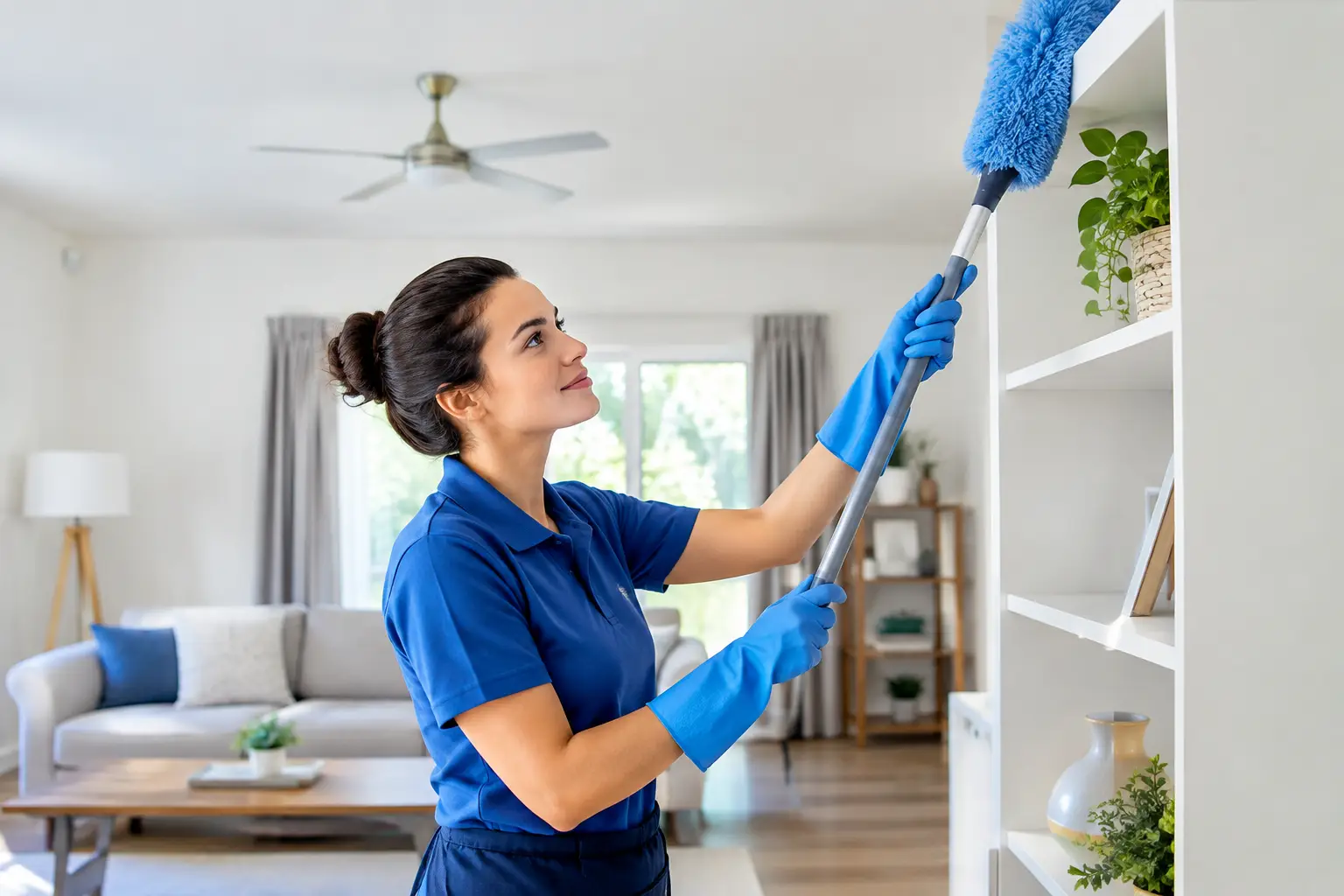
Begin by removing cobwebs from corners and dusting ceiling fans, vents, and light fixtures. Use a clean microfiber cloth that traps dust instead of pushing it into the air. If a fan has visible buildup, place an old pillowcase over each blade and pull it back slowly. The dust stays contained inside the case rather than falling across furniture.
Move down to shelves, picture frames, lamps, window ledges, and furniture. Straighten cushions and remove items from surfaces before wiping them. Upholstered furniture may need vacuuming after dusting is complete, especially around seams and under cushions.
Finish with the floor. Vacuum carpets and rugs carefully, including edges and under reachable furniture. For hard floors, vacuum or sweep first, then mop with a product appropriate for the floor material. Too much water can damage some wood and laminate flooring, so a lightly damp mop is often the better choice.
Kitchens
In a kitchen, begin with upper cabinets, the top of the refrigerator, range hood areas, and light fixtures. Grease can collect on high surfaces even when it is not immediately visible. A gentle, eco-conscious degreasing solution can be effective for routine buildup without filling the room with strong chemical odors.
Continue with cabinet fronts, backsplash areas, counters, small appliances, and the outside of larger appliances. Clean the sink after food preparation areas so it is ready to receive rinsed cloths or tools during the job. The stovetop should be addressed before the floor, since crumbs and residue often fall during cleaning.
Floor cleaning comes last. This is especially important in kitchens, where crumbs, coffee grounds, and cooking debris can quickly undo a freshly mopped floor. Finish only after the upper and middle surfaces are clean so newly fallen debris is collected in one final pass.
Bathrooms
Bathrooms need a slightly different workflow because cleaning products often require dwell time. Apply cleaner to the shower, tub, toilet exterior, and sink surfaces first. While it works, dust vent covers, light fixtures, upper shelving, and wall corners.
Then return to scrub and rinse the shower or tub, clean mirrors, wipe counters, and disinfect high-touch points such as faucet handles, flush handles, light switches, and door handles. Use separate cloths for toilet cleaning and other surfaces to avoid cross-contamination.
Clean the bathroom floor last, paying attention to the area around the toilet base and behind the door. A clean, dry floor improves both appearance and safety, particularly in a busy household.
Work From Clean Areas Toward Dirtier Areas
Top to bottom is the main principle, but it works best alongside another practical habit: move from cleaner spaces toward dirtier ones. In a home, bedrooms and living areas may come before bathrooms and kitchens.
This reduces the chance of transferring grime from a high-use area to a cleaner surface. It also helps you manage supplies appropriately. A cloth used to wipe a desk should not later be used on a bathroom counter. Color-coded cloths or clearly separated cleaning supplies can make this easier, especially when multiple people are handling cleaning duties.
There are exceptions. If a spill needs immediate attention, clean it right away rather than waiting for the rest of the schedule. The top-down rule is a framework, not a reason to ignore a safety concern.
Common Habits That Create Extra Work
Cleaning floors too early is the most common mistake, but it is not the only one. Many people spray and wipe one surface at a time without allowing cleaners to sit long enough to loosen residue. Others use the same cloth throughout an entire room, spreading soil instead of removing it.
Another issue is overusing product. More cleaner does not necessarily mean a cleaner surface. Excess spray can leave streaks, attract dust, or create a sticky film on counters and floors. Start with a small amount, follow label directions, and change to a fresh cloth when the one in use is visibly soiled.
Do not forget high-touch surfaces. Door handles, remote controls, cabinet pulls, phones, keyboards, and light switches can affect how clean a space feels and functions. They deserve regular attention, but they should be handled after dusting nearby high surfaces and before final floor care.
A More Efficient Routine for Your Home
A reliable cleaning routine begins with preparation. Bring the tools and products needed for the room before you start, empty trash bins when appropriate, and clear clutter from surfaces. This prevents repeated trips for supplies and lets you follow the sequence without interruption.
For recurring service, focus on the areas that affect comfort and everyday maintenance: bathrooms, kitchens, floors, touchpoints, and visible dust. Deep-cleaning tasks such as baseboards, inside cabinets, blinds, and behind appliances can be rotated into the schedule when included in the agreed scope. This balance keeps routine visits efficient while ensuring neglected areas do not become a larger problem later.
Trademark Cleaning uses this kind of organized approach to support residential customers across Harford County. Dependable cleaning is not only about the products used. It also comes from using a sound process every time.
The next time a room needs attention, resist the urge to begin with the most visible dirt on the floor. Start at the highest point, work steadily downward, and let the final pass on the floor complete the room. That one change can make regular cleaning feel less repetitive and leave your home easier to enjoy and maintain.