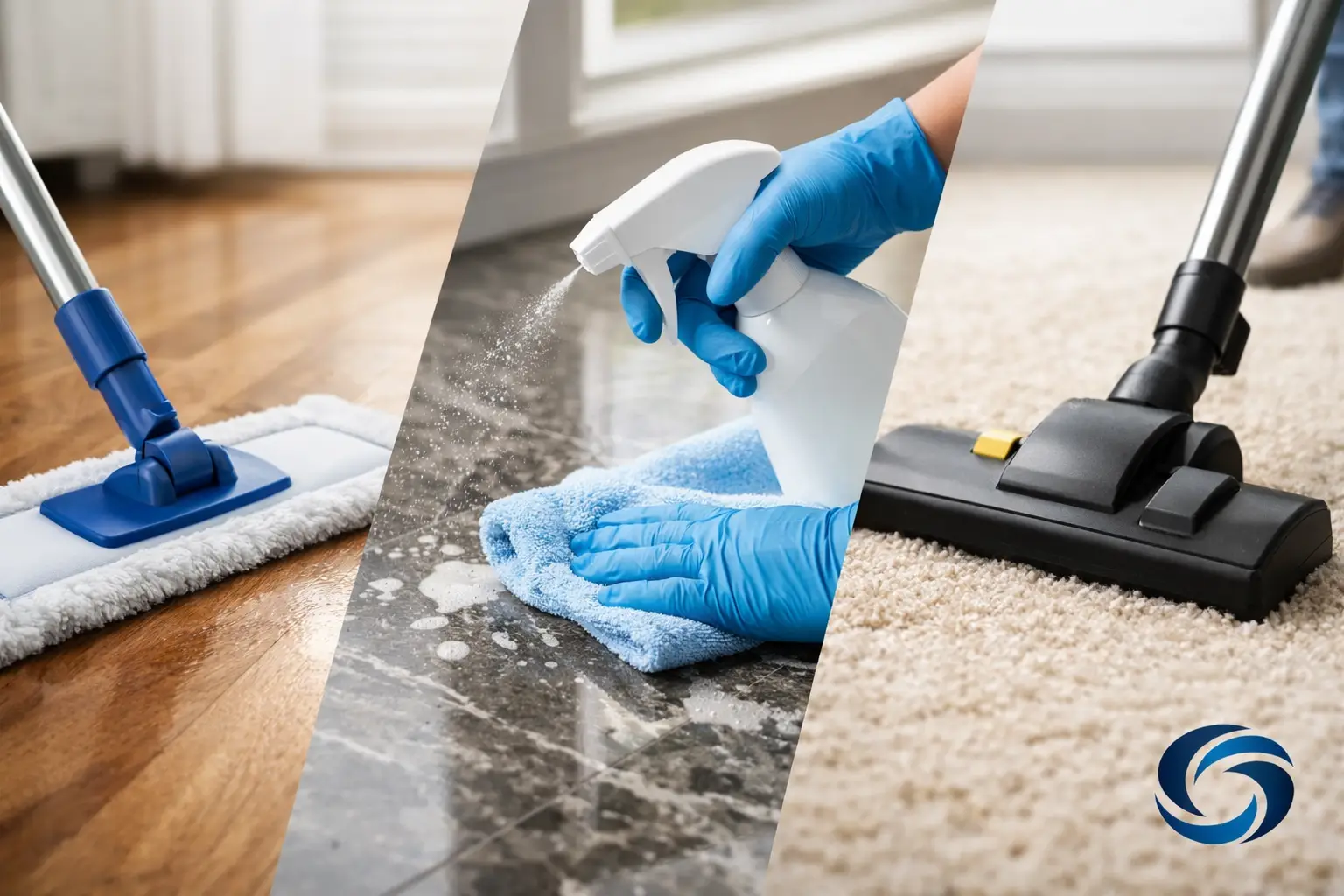
A clean floor changes how a room feels before anyone notices the furniture, décor, or view. It also takes the most daily wear from shoes, pets, spills, rolling chairs, and outdoor debris. Effective floor cleaning is not simply about making a surface shine. It is about using the right method to remove soil without dulling finishes, leaving residue, or shortening the life of the material.
For homeowners and renters, the best approach depends on what is underfoot, how much traffic the area receives, and how quickly it needs to be ready for use again. A kitchen floor may need frequent attention for grease and food residue. An entryway may need a plan for salt, rainwater, and tracked-in grit. Treating every floor the same can create more work and, in some cases, permanent damage.
Why Floor Cleaning Requires the Right Method
Dust and loose grit are more than an appearance issue. On hard flooring, small particles act like sandpaper under shoes and furniture, gradually wearing away protective finishes. On carpet, dirt settles beneath the visible fibers, contributing to odors, discoloration, and a flattened appearance over time.
Moisture is another concern. Wood, laminate, and some luxury vinyl products can be damaged by excessive water, even when the surface looks sealed. Tile is generally more water-resistant, but grout can hold dirt and moisture if it is not cleaned thoroughly. Carpet needs enough moisture to lift embedded soil, but it must also dry properly to avoid musty odors and disruption.
This is why a dependable cleaning routine starts with identifying the material and checking the manufacturer’s care instructions rather than reaching for the strongest cleaner available. Harsh chemicals can strip finishes, leave a sticky film, or create strong odors in homes. Eco-friendly products and careful application can provide a practical alternative when they are matched to the surface and the job.
Floor Cleaning by Surface Type
Hardwood and engineered wood
Wood floors benefit most from frequent dry soil removal and limited moisture. Vacuum with a hard-floor setting or use a soft microfiber mop to collect grit without scratching. When a deeper clean is needed, use a wood-safe solution sparingly and avoid soaking the floor. A mop should be damp, not wet, and any spills should be addressed promptly.
Steam cleaning is not always appropriate for wood. High heat and moisture may weaken finishes or allow water into seams, particularly on older floors and engineered wood products. It depends on the manufacturer’s recommendations and the condition of the finish. When in doubt, a gentle low-moisture method is the safer choice.
Laminate and luxury vinyl plank
Laminate and luxury vinyl are popular because they offer a clean, durable look with relatively simple maintenance. Still, they are not maintenance-free. Regular sweeping or vacuuming prevents abrasion, while a lightly damp microfiber mop removes everyday marks and residue.
Avoid waxes, oil soaps, abrasive scrubbers, and heavy amounts of water. These products can leave a cloudy film or make the floor slippery. For scuffs, a surface-appropriate cleaner and a soft cloth are usually more effective than aggressive scrubbing.
Tile, grout, and natural stone
Ceramic and porcelain tile handle moisture well, making them practical choices for bathrooms and kitchens. The grout between tiles needs more attention because it is porous and catches soil quickly. Routine mopping keeps tile presentable, but periodic detail cleaning helps address grout lines that have darkened over time.
Natural stone is different. Marble, travertine, limestone, and similar materials can react badly to acidic cleaners, including products that contain vinegar or citrus ingredients. These cleaners may etch the surface and leave dull spots. Stone should be cleaned with a pH-neutral product designed for that material, followed by thorough drying.
Carpet and area rugs
Carpet holds more than visible debris. It can collect dust, pet hair, pollen, food particles, and soil carried in from outdoors. Regular vacuuming is the first line of defense, especially in hallways, family rooms, and other areas with steady foot traffic.
Spot treatment should happen quickly, but not every stain responds to the same product. Rubbing a spill can spread it deeper into the fibers. Blotting with a clean cloth and using the correct treatment for the stain is usually the better method. Deep stains, odors, or carpet restoration may require a carpet-care specialist; routine house cleaning and vacuuming do not provide those specialist services.
Build a Routine Around Foot Traffic
A floor cleaning schedule should reflect real use, not a one-size-fits-all calendar. A quiet guest room may only need routine vacuuming and occasional damp mopping. A busy household entryway may need attention several times each week.
For most homes, dry debris should be removed from high-traffic hard floors every few days, with damp cleaning as needed. Kitchens and bathrooms often require more frequent mopping because they face food spills, moisture, and product residue. Carpets should be vacuumed regularly, with extra passes in areas where pets, children, or outdoor shoes are common.
Common Mistakes That Shorten Floor Life
Many floor problems come from well-intentioned cleaning habits. Using too much product is one of the most common. More cleaner does not always mean a cleaner result. It can leave residue that attracts new dirt, causes streaks, and makes floors feel tacky.
Skipping the dry-cleaning step is another mistake. Mopping over loose debris often pushes it around or turns it into a muddy film. Sweeping, dust mopping, or vacuuming first makes wet cleaning more effective.
The wrong tools can also cause damage. Stiff brushes may scratch finishes, while worn vacuum wheels can mark delicate surfaces. Dirty mop water spreads soil instead of removing it. Clean tools, fresh water, and surface-safe products make a visible difference without adding much time to the process.
When Professional Floor Cleaning Makes Sense
Routine care is enough for many day-to-day needs, but some situations call for professional support. Floors may need more than a quick mop after a move, a gathering, winter weather, or a busy period at home. Deep cleaning can help address buildup that regular household products do not fully remove.
Professional service is also useful when several rooms need consistent attention. A trained team can follow an organized process, use products appropriate for the flooring, and work around the schedule of your household.
For customers in Harford County, Trademark Cleaning provides dependable residential cleaning with environmentally conscious options. The goal is not to overpower a room with chemical fragrance. It is to leave floors clean, cared for, and ready for daily life.
Keep Floors Cleaner Between Visits
The simplest preventive measures have the biggest effect. Use entry mats at exterior doors, and clean them often so they continue trapping dirt rather than releasing it indoors. Ask family members or guests to wipe shoes thoroughly, especially during wet Maryland weather. Place protective pads under furniture legs and check them periodically for trapped grit.
Address spills while they are fresh, use the right cleaner in the right amount, and give floors time to dry before heavy use. These small habits reduce the need for aggressive cleaning later. A well-maintained floor does more than look polished — it helps your home feel cared for from the ground up.